Endurism Dossier: Physical Media
The ownership case for the things you watch, hear, read and play.
Category: access-vs-ownership. This is a new NCO variant. Not the patina template. Not the electronics template. The ledger runs on residual value and revocation risk. Vinyl is the one sub-category that also carries a patina dividend.
Part 1. The analysis
On 26 June 2026, Sony emailed PlayStation owners a list. 550 films they had paid for would leave their libraries on 1 September. No refund was offered.
The titles were not obscure. Terminator 2. Total Recall. Apocalypse Now. The Rambo trilogy. Evil Dead. The films are distributed by StudioCanal. Sony let the licence lapse. Every "purchase" lapsed with it.
Sony's own notice used the word plainly. The content "will be removed from your video library." The button that took the money said Buy. The fine print said licence. The licence won.
This is not the first time. Sony closed its PlayStation movie store in 2021. It quietly pulled around 300 films in 2022. In Germany and Austria, the PlayStation Store has already revoked hundreds of purchased movies for good. The June 2026 purge is the pattern, not the exception.
The same trap, every platform
Apple argued the point in a California court. Its position: no reasonable consumer would believe an iTunes purchase stays available forever. Movies vanish there too when a studio changes a file or pulls a licence. Amazon told a customer the same thing. Her Prime purchases could disappear because she bought a limited licence, not a copy.
The oldest case is the sharpest. In 2009, Amazon reached into Kindles and deleted a book people had paid for. The book was George Orwell's 1984. The irony wrote itself.
A pattern holds across all of it. You do not own the digital film, album, game or book. You hold a revocable licence to access it. Access ends when the platform says so.
Games are next in line
Grand Theft Auto VI arrives on 19 November 2026. It is the biggest entertainment launch in over a decade. Pre-orders opened on 25 June. The standard edition is priced at $79.99, roughly €80 in the eurozone.
There is a physical box. Inside the box is a download code. There is no disc. Once the code is redeemed, the game binds to your account. You cannot lend it. You cannot sell it. You cannot pass it to your brother when you are done. The box is a receipt for a licence.
The numbers explain why publishers do this. By May 2026, 27 percent of PS5 consoles and 52 percent of Xbox Series consoles sold had no disc drive at all. Sony reports 85 percent of its games sell digitally. A finished digital game returns nothing. A finished disc returns cash on the second-hand market. Removing the disc removes the resale market. That is the design, not a side effect.
The counter-shift is already visible
While digital ownership erodes, physical ownership is growing. In 2025, United States vinyl sales passed one billion dollars for the first time this century. That is 46.8 million records, a 19th straight year of growth. Vinyl now earns more than three times what CDs earn. Globally the pattern repeats. Physical music revenue rose 8 percent in 2025 to 5.3 billion dollars, the fastest-growing format category of the year.
This is not the old collector buying back his youth. Gen Z drives it. In 2024, under-27s were the largest group of vinyl buyers. 76 percent of Gen Z vinyl buyers say the point is to own a physical copy of the music. A third of Gen Z globally report taking up analogue hobbies to escape digital exhaustion.
The reflex is spreading beyond music. 4K collectors, print magazines, point-and-shoot film cameras. People are buying things they can hold, in a decade defined by things they cannot.
The regulators noticed before we did
California passed AB 2426 in September 2024. It took effect on 1 January 2025. It is the first United States law of its kind. A storefront may no longer print a "Buy" button on a revocable licence without telling you, in plain language, that access can be pulled.
Read what triggered it. Sony's 2023 threat to Discovery content. Ubisoft revoking every licence to The Crew in April 2024, a game people had paid for and could no longer launch. The PlayStation movie removals in Germany and Austria. The state wrote a law because the platforms kept deleting what people believed they owned.
Valve saw it coming. Three months before the law, Steam added a line to its checkout. It tells you that you are buying a licence to access a game on the Steam platform. An honest sentence, finally, at the point of sale.
Why this is the purest Endurism case
Endurism Principle IV: ownership is not the same as access. We wrote that about a winter coat you replace every year on subscription to the brand. Digital media is the same principle, stripped to the bone.
You paid ownership prices. You received rental-grade access. The platform holds the switch. On 1 September, Sony flips it for 550 films. The people who paid keep nothing.
The Endurism-worthy alternative is the oldest one. A thing you hold. A thing that stays on your shelf past the receipt, past the warranty, past the licensing deal, past the company that sold it to you. Own better.
Part 2. The Endurism-worthy alternatives
Four media. Four cheap counterparts. In every case the cheap counterpart is the same object: a revocable licence sold with an ownership button. The alternative is the owned copy.
Games. Physical discs and cartridges. The cheap counterpart is the digital licence or the code-in-a-box. The alternative is a game that ships on a disc you can finish and resell, or a Nintendo cartridge with no mandatory install. Entry cost is the same as digital. The disc adds a resale floor the download will never have.
Music. Vinyl and a real turntable. The cheap counterpart is a streaming subscription that owns you nothing after three years of payments. The alternative is a repairable turntable and a core of records that stay yours. Entry turntable from around €319. This is the honest one. Streaming is cheaper for volume. Vinyl is ownership.
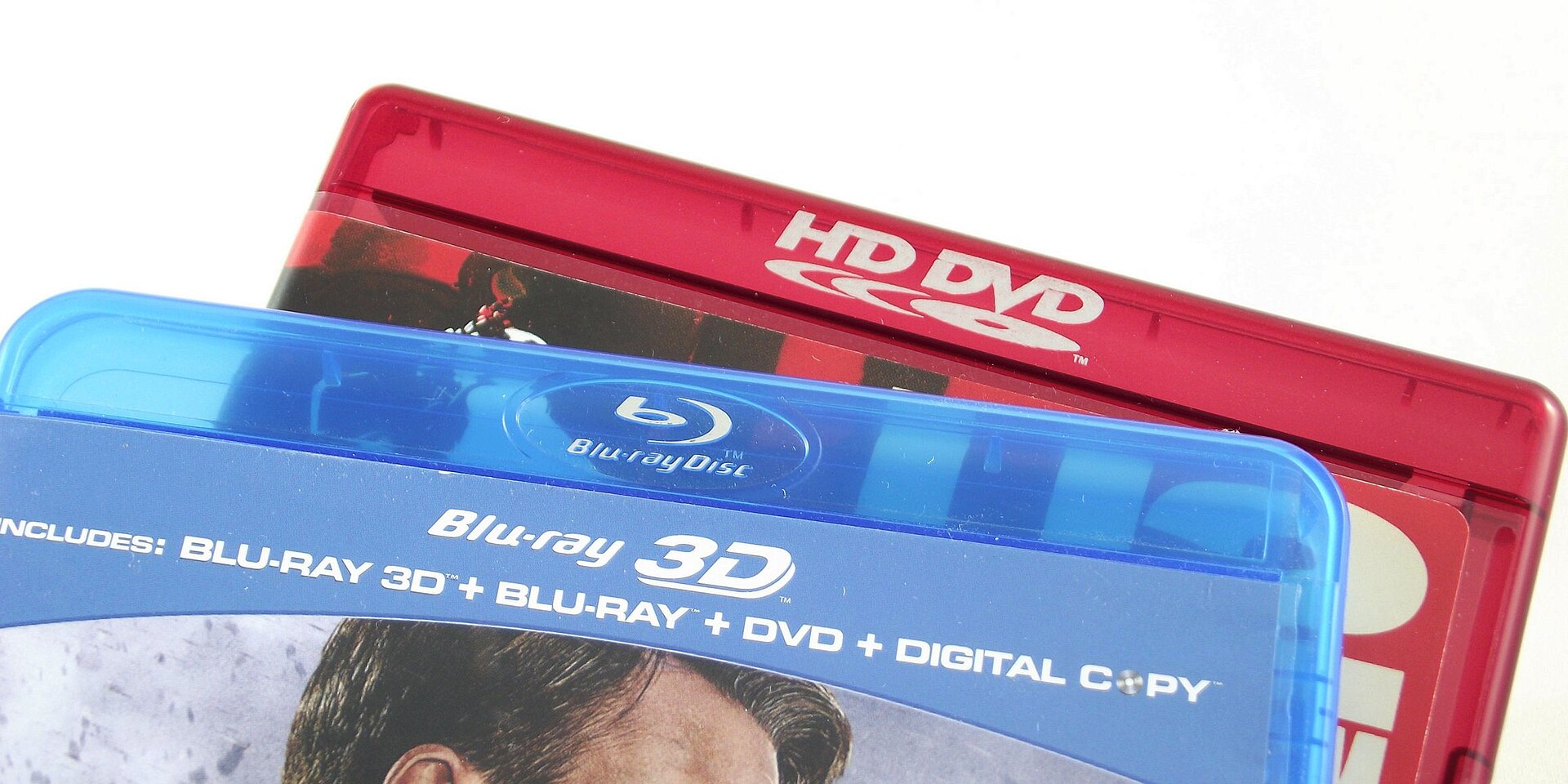
Movies and television. 4K Blu-ray. The cheap counterpart is the €13 digital "purchase" Sony just proved it can delete. The alternative is a 4K disc at the best possible picture quality, permanent, resellable, playable with no internet. Entry player from around €150.
Books. Print. The cheap counterpart is the DRM-locked ebook that Amazon has reached into before. The alternative is the printed book. Lendable, resellable, readable on any afternoon with no login and no battery.
Each alternative gets a full dossier below.
Dossier A. Games: the disc that holds its value
NCO ledger, three years
Scenario: an active player who buys and finishes around five titles a year. Fifteen games over three years. Average price €72.
| Physical discs | Digital licences | |
|---|---|---|
| Spend, 15 games at €72 | €1,080 | €1,080 |
| Resale, ~€40 average per finished game | −€600 | €0 |
| Lendable to friends | yes | no |
| Revocable by the platform | no | yes |
| Net cost over 3 years | €480 | €1,080 |
The ownership dividend is €600 over three years. That is the money the disc hands back and the download keeps.
Honesty note. Digital sales run deep discounts. A game bought at €35 on a platform sale narrows the up-front gap. It never returns a cent. It can still be revoked. A discounted licence is still a licence.
The GTA VI warning. The biggest release of the decade ships with no disc at launch. The "physical" box is a code. A disc version is rumoured for December 2026 and unconfirmed by Rockstar. This dossier does not recommend GTA VI as the owned alternative. It is the cautionary example. The alternative is the large catalogue of games that still ship on real discs. Nintendo cartridges count too.
Long-form (The Editor)
A finished game has a resale value the day you put down the controller. Unless you bought the download. Then it has none.
A disc is a bearer object. Whoever holds it can play it, lend it, sell it. The value lives in your hand. A digital game lives in an account the platform controls. You rent a seat. The seat is revocable.
Do the arithmetic on a normal habit. Fifteen games over three years, seventy-two euros each. On disc you spend €1,080 and sell the finished ones back for around €600. Your real cost is €480. On download you spend the same €1,080 and recover nothing. Your real cost is €1,080. Same games. Same hours played. Six hundred euros of difference, sitting in the resale you gave away.
This is why publishers want the disc gone. Circana's numbers are blunt. More than a quarter of PS5 consoles now sell with no drive. Eighty-five percent of PlayStation games sell as downloads. Kill the disc and you kill the second-hand shop. The used market was the last place a game paid you back.
GTA VI is the tell. A box on the shelf at Walmart with a slip of paper inside. Eighty euros for a code that binds to your account the moment you redeem it. Rockstar built a physical object that behaves exactly like a digital one. The retailers noticed. Some refused to stock the empty box.
The owned move is unglamorous. Buy the games that still come on discs. Buy the Nintendo cartridges. Finish them. Sell them or lend them or shelve them. The disc was always the better deal. The math was just quieter than the marketing.
Verdict card
A disc you finish is worth forty euros. A download you finish is worth nothing.
Dossier B. Music: the record versus the rental
NCO ledger, three years
Scenario: build a core of the music you actually return to. Thirty records over three years at €30 average. One entry turntable.
| Vinyl core | Streaming | |
|---|---|---|
| Turntable, one-off | €319 | €0 |
| 30 records at €30 | €900 | €0 |
| Subscription, 36 months at €12.99 | €0 | €468 |
| Residual value at year 3 | turntable holds value, records hold or rise | €0 |
| Yours if you stop paying | everything | nothing |
| Spend over 3 years | €1,219 | €468 |
Read this ledger straight. Streaming wins the cash calculation. €468 buys three years of near-infinite music. A vinyl core costs €1,219 for thirty albums and a machine.
That is the honest number. Here is the honest reframe. After three years the streaming subscriber owns nothing. Stop paying and the library is gone the same afternoon. The vinyl owner has a machine and thirty records that stay, play with no account, hold their value. One path rents access. The other builds a collection.
Endurism does not tell you to cancel streaming. Use it to find the music. Then own the twenty or thirty albums that earn a place on the shelf. That is where the record beats the rental.
Long-form (The Editor)
Streaming is the cheapest music has ever been. It is also the least owned. Both things are true. The second one is the point.
Twelve euros ninety-nine a month buys almost every song ever recorded. Stop the payment and it all vanishes at once. Three years of Spotify costs €468 and leaves you with a cancelled account. You rented the music. The rent was fair. You still own nothing.
A record is the opposite transaction. Thirty euros buys one album that is now yours. It plays on a machine that needs no login and no signal. It survives the label, the app, the company. Sought-after pressings gain value on the used market. The object works as a store of worth, which no subscription has ever done.
The machine matters as much as the music. A Pro-Ject turntable from around €319 is built in Europe from parts you can replace. The belt is a spare. The cartridge upgrades. A turntable maintained is a twenty-year object. Compare that to the streaming app, which owns nothing and depreciates to zero the moment you close the account.
Look at who is buying. Vinyl passed one billion dollars in the United States in 2025, a 19th straight year of growth. It earns three times what CDs earn. Gen Z leads the buying. Three in four of them say the whole point is to hold a physical copy. A generation raised on infinite access is paying thirty euros to own one record. They understand the difference between renting and keeping.
The Endurism move is a hybrid done honestly. Stream to discover. Buy the albums you return to. The subscription is a search engine. The shelf is the library. Own better.
Verdict card
You rent the stream. You own the record.
Dossier C. Movies and television: the disc that cannot be deleted
NCO ledger, three years
Scenario: someone who "buys" twenty films over three years to keep.
| 4K Blu-ray | Digital "purchases" | |
|---|---|---|
| Player, one-off | €175 | €0 |
| 20 discs at €24 | €480 | €0 |
| 20 digital films at €13 | €0 | €260 |
| Resale of discs, ~€10 each | −€200 | €0 |
| Revocable by the platform | no | yes |
| Net cost over 3 years | €455 | €260 |
The digital column looks cheaper. It is, on paper, until the platform sends the email.
That is the whole argument. Digital costs less because it is worth less. You pay a purchase price for something that can leave your library on a Tuesday. The StudioCanal buyers paid full price for 550 films. On 1 September they keep zero films and get zero refund. The disc owner keeps every one.
A 4K disc is a permanent copy at the best quality made. Bought once, resellable, playable with no signal. The digital film is a licence dressed as a purchase. Sony removed the costume in June 2026.
Long-form (The Editor)
On 1 September 2026, 550 films leave the libraries of people who paid for them. The disc versions of those same films stay exactly where they are. That is the entire case.
Sony did not rent these movies to anyone. It sold them, under a button that said Buy. Then a licence with StudioCanal lapsed. The purchases lapsed with it. No refund. Terminator 2, Apocalypse Now, the Rambo films. Paid for, then deleted by email.
This is not a Sony problem. Apple told a court that no reasonable person should expect an iTunes purchase to last. Amazon told a customer her Prime films could vanish. In 2009 Amazon deleted a paid copy of Orwell's 1984 off people's Kindles. Every digital storefront runs the same terms. Purchase means licence. Licence means revocable.
Now the arithmetic, which cuts the other way at first. Twenty films on 4K disc: a €175 player, €480 of discs, around €200 back on resale. Net €455. Twenty digital "purchases": €260 and nothing to resell. Digital is cheaper. It is cheaper because it is worth less. You are paying a purchase price for a rental you can lose.
The disc is the better object on every axis except price. It holds more data, so it looks and sounds better than any stream. It plays in a power cut. It sells on. It cannot be revoked by anyone, because it is a physical thing in your house. Best Buy stopped selling discs. Disney laid off its home-video division. The disc is getting rarer, which is exactly when the ones you own get more valuable.
Buy the 4K disc of the films you rewatch. Stream the rest and expect nothing to stay. Own the ones that matter. The email cannot reach your shelf. Own better.
Verdict card
A disc cannot be revoked by email.
Dossier D. Books: the copy versus the login
NCO ledger, three years
Scenario: a reader who buys twenty-five books over three years.
| Ebook | ||
|---|---|---|
| 25 books at €18 | €450 | n/a |
| 25 ebooks at €12 | n/a | €300 |
| Lendable | yes | no |
| Resellable second-hand | yes, real market | no |
| Yours if the account closes | yes | no |
| Revocable by the seller | no | yes |
| Cost over 3 years | €450 | €300 |
The ebook is cheaper. It is cheaper because you do not own it. You cannot lend it, sell it, or keep it if the account goes. Amazon has already shown it will reach in and delete.
Print costs more and returns more. A read book can be lent to a friend, sold on, or shelved for life. The copy is yours in a way a login never is.
Long-form (The Editor)
An ebook is a login with a book attached. Close the account and the library goes with it. That has already happened. The book they deleted was 1984.
The price gap is real. A €12 ebook against an €18 paperback. The gap exists because the two things are not the same. One is a copy you own. The other is permission to read, held on a server, revocable by the seller, lockable to a single account. Amazon proved the point twice. Once by deleting Orwell in 2009. Again in 2025, by removing the way to move a Kindle book off Amazon's grip.
A printed book asks nothing of you after purchase. No charge, no signal, no update, no account. You can lend it. You can sell it. You can put it on a shelf where it will outlast the retailer that printed it. The second-hand market for books is deep and old, which means the copy holds worth.
Buy the ebook for the airport novel you will read once. Buy the printed copy of the book you will keep, lend, return to. Convenience is worth twelve euros. Ownership is worth eighteen. Own better.
Verdict card
An ebook is a login. A book is a book.