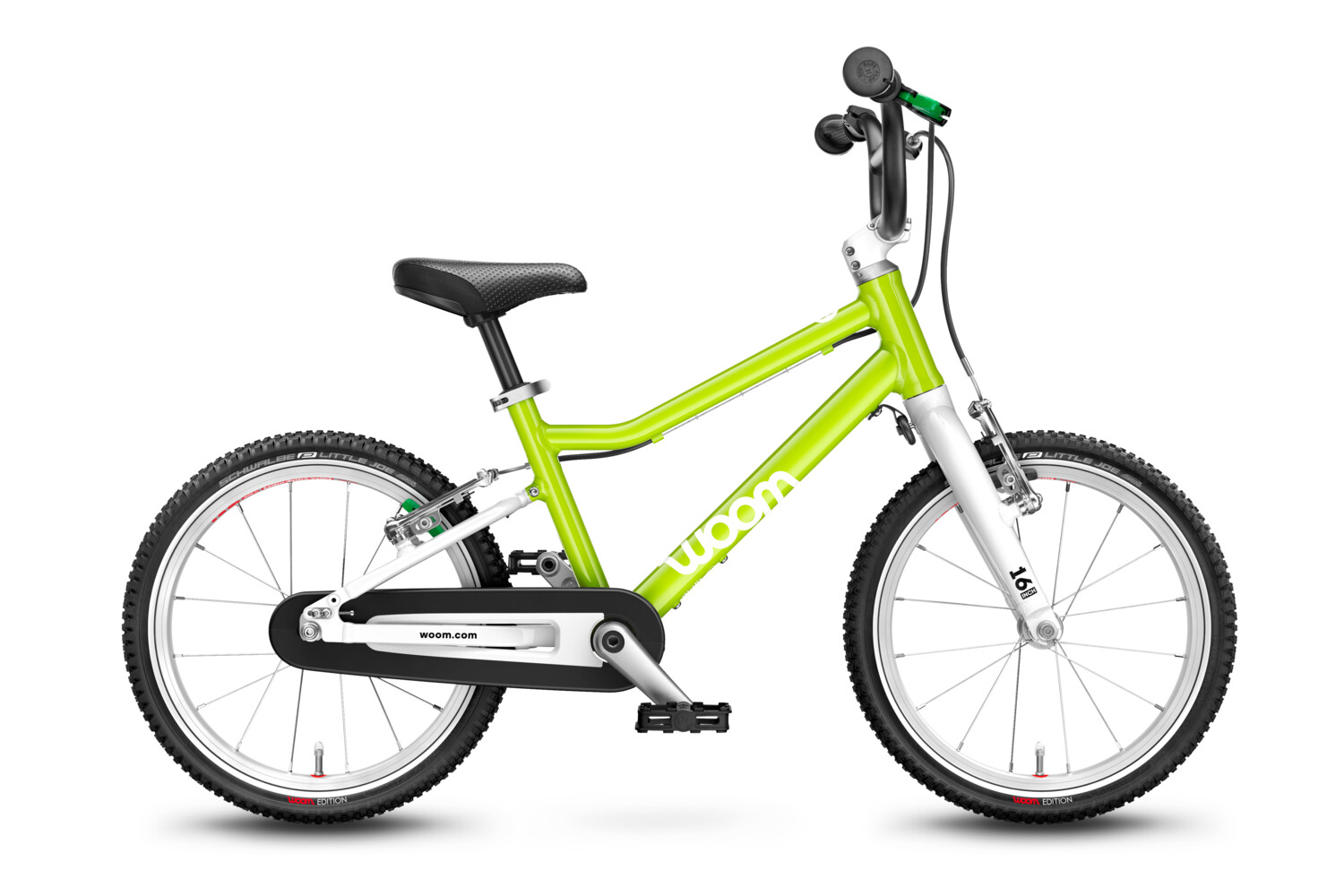
Endurism Spotlight: woom Original 3
A four-year-old outgrows a bike in about two summers. The €99 model from the supermarket goes to the scrap heap when that happens, and nothing comes back.
The money
Children's bikes are a serial purchase written into biology. A child needs a bigger frame roughly every two years, so most parents buy four bikes before the teens arrive. Buy cheap each time and every euro is gone the moment the bike is outgrown. The discount steel bike has no second life. It rusts in the shed and then it is scrap.
The woom Original 3 is the rare children's bike that behaves like an asset. It holds roughly half its value on the secondhand market. woom also runs an official trade-in that returns 40 percent of the price toward the next size up. Your money stays partly liquid instead of vanishing.
The object
The Original 3 is a 16 inch bike for a four to six year old. Its alloy frame weighs 5.4 kilograms, which matters more than any spec sheet. A cheap bike weighs eight or nine kilos. That is close to half the child's own weight, and a small rider struggles to control it.
The geometry is drawn around a child's body, with a low standover and a short reach to the bars. The brakes are set for small hands and the Schwalbe tyres roll properly. Because the components are standard, any bike shop can keep it running for years.
The math
Take one size rung of roughly two to three years.
| woom Original 3 | Discount 16" bike | |
|---|---|---|
| New price | €469 | ~€100 |
| Weight the child rides | 5.4 kg | ~8 to 9 kg |
| Value recovered when outgrown | ~€230 | ~€0 |
| What you are left with | a bike worth reselling | a bike for the scrap heap |
Across a childhood of four frames the woom keeps handing money back at every step. The supermarket bikes hand back nothing, four times over. The woom costs more on the day you buy it. Roughly half of that money later comes back to you, while the cheap bike returns nothing.
Ownership
A woom survives siblings. The frame passes from the first child to the second. Then it sells to another family through the secondhand market or woom's own resale marketplace. Scuffs and stickers barely touch the price, because buyers want the frame and the parts underneath. Parents look for these bikes specifically. That steady demand is what keeps their value up.
A child's bike is money most parents set fire to. The woom is the one that gives half of it back.