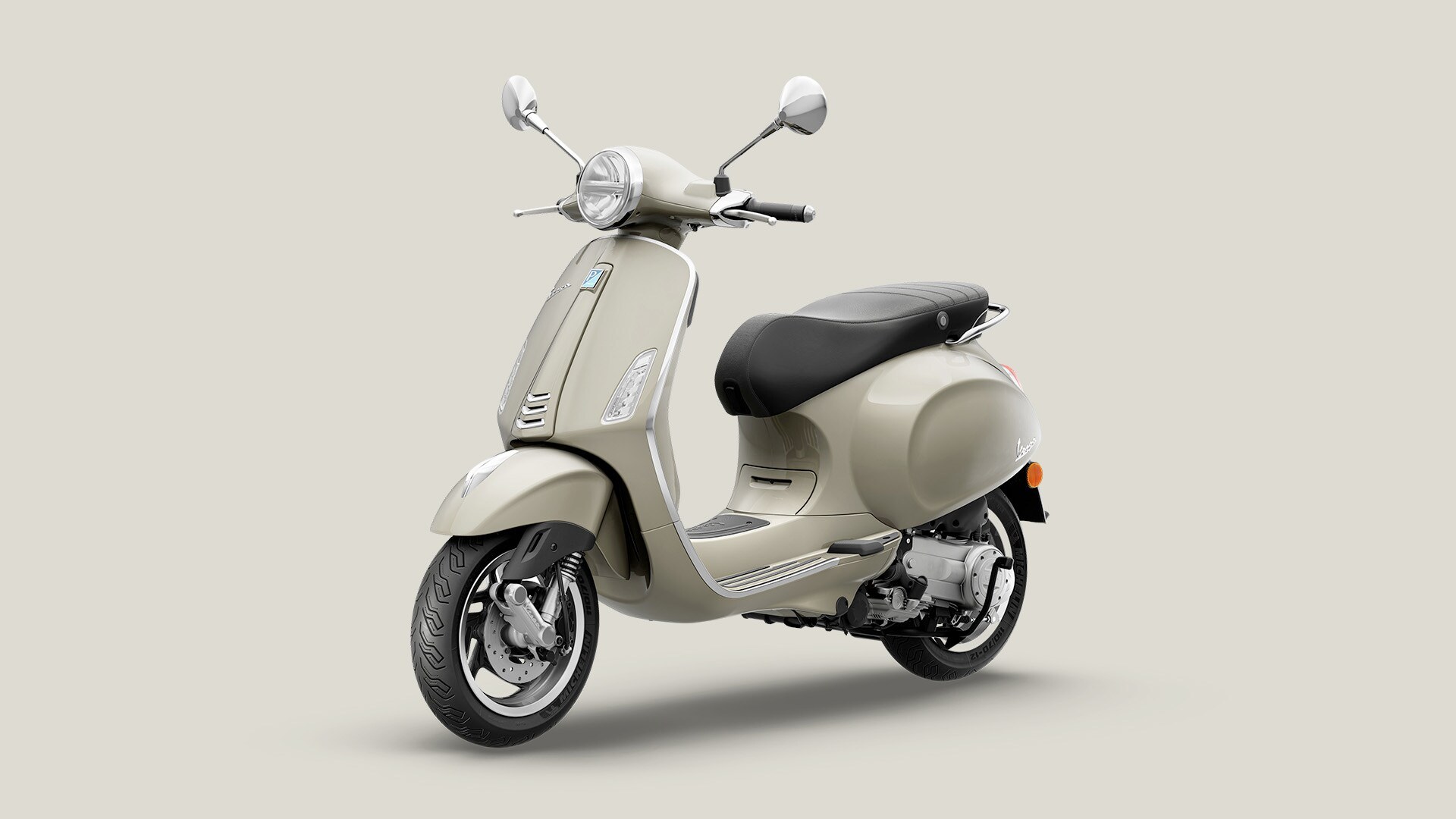
Five years in, a cheap scooter is worth almost nothing. Fifteen years in, a Vespa still sells for four figures.
That gap is the whole case. Money spent on a budget snorscooter is gone the moment you ride it away. Money spent on a Vespa mostly sits there, parked in steel, waiting for you to get it back.
The Vespa Primavera is a pressed steel monocoque, a body Piaggio has built to the same principle since 1946. There is no plastic fairing to crack. A dealer network and a deep classic-parts trade keep these scooters running for decades. Specialist workshops across the Netherlands restore Vespas older than the people riding them. Every wheel, panel, cable and carburettor is a part you can still order. A forty-year-old Vespa is a common sight on a Dutch street. A forty-year-old budget scooter is a landfill memory.
A new Primavera 50 runs €4.530. A budget snorscooter starts around €899 and a typical one lands near €1.200. The cheap machine looks like the win, until the clock runs. Chinese scooters tend to give out inside five years. The parts to save them are scarce, so most owners simply buy another. A Vespa serviced and kept still sells for €1.000 to €1.400 a decade on. Low-mileage examples fetch €2.000. Fuel and insurance fall on both riders equally, so they leave the sum.
| Vespa Primavera 50 | Budget scooter | |
|---|---|---|
| New price | €4.530 | ~€1.200 |
| Machines over 15 years | 1 | 3 |
| Total spent | €4.530 | €3.600 |
| Resale after | €1.200 | €0 |
| Net cost of ownership | €3.330 | €3.600 |
Over fifteen years the Vespa costs about the same to own. What separates the two paths is what you hold at the end. One rider owns a four-figure asset with a queue of buyers on Marktplaats. The other has sent three scooters to the scrapyard.
A Vespa ages into something people want more. The steel takes a patina. The shape was settled generations ago, so a clean example reads as a collectible rather than a cast-off. This is the patina dividend in metal. Your money sits in a machine that holds its worth while you ride it. The buyers are already waiting when you decide to sell.
Verdict: buy the Vespa once and hold a four-figure asset while the cheap scooter beside it is scrapped and rebought three times.