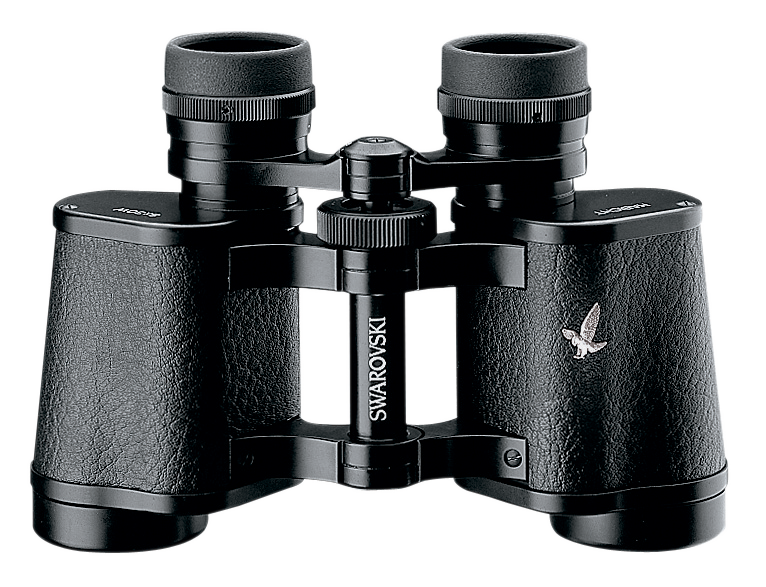
A used Swarovski Habicht 8x30 still sells for around six hundred euro, decades after it left the factory in Absam.
That number is the whole case. The Habicht was Swarovski Optik's first product in 1949. It launched in 8x30 alongside a few other sizes. Swarovski still sells those same sizes today. The porro-prism optical layout has barely changed since the 1960s. A pair from that era, cleaned and collimated, still gives a view a modern buyer is happy to pay for.
The build is why. The body is metal. The focus and hinge are mechanical, with no electronics to date the instrument or fail on it. Swarovski backs it with a thirty-year warranty and services these binoculars in Austria long after that. Glass this well made does not wear out. It gets passed on.
New, the 8x30 costs €1.044 at Dutch retailers. That is real money for something you look through. The wealth logic sits in what happens next. A well-kept Habicht holds roughly half its price on the used market for decades. The true cost of owning one settles near five hundred euro across a lifetime of use. You can sell it any weekend for a figure close to what you paid.
Now the cheap route. A thirty-euro compact from the bestseller list hazes and drifts out of alignment within two years. Then it goes in the drawer. Most people who care about the view then start climbing. They buy a €165 Nikon Prostaff. When it disappoints they move up to a €369 Monarch. Even then the view falls short of the Habicht. Add those rungs together and you have spent more than the Habicht's net cost, with nothing worth reselling at the end.
| Over ~25 years | Swarovski Habicht 8x30 | The cheap ladder |
|---|---|---|
| Bought | €1.044 once | €30 + €165 + €369 |
| Resale value | ~€550 | ~€0 |
| Net cost of ownership | ~€494 | ~€564 |
| At the end | a sellable asset | a drawer of dead optics |
Ownership here is quiet. The leather or armour on the barrels darkens and softens with handling. The glass stays sharp. The instrument becomes yours the way a mechanical thing does. It keeps a resale floor the whole time you hold it. When you are done with it, it becomes someone else's Habicht.
Verdict: buy the glass once, own an asset that resells for half its price for the rest of your life.