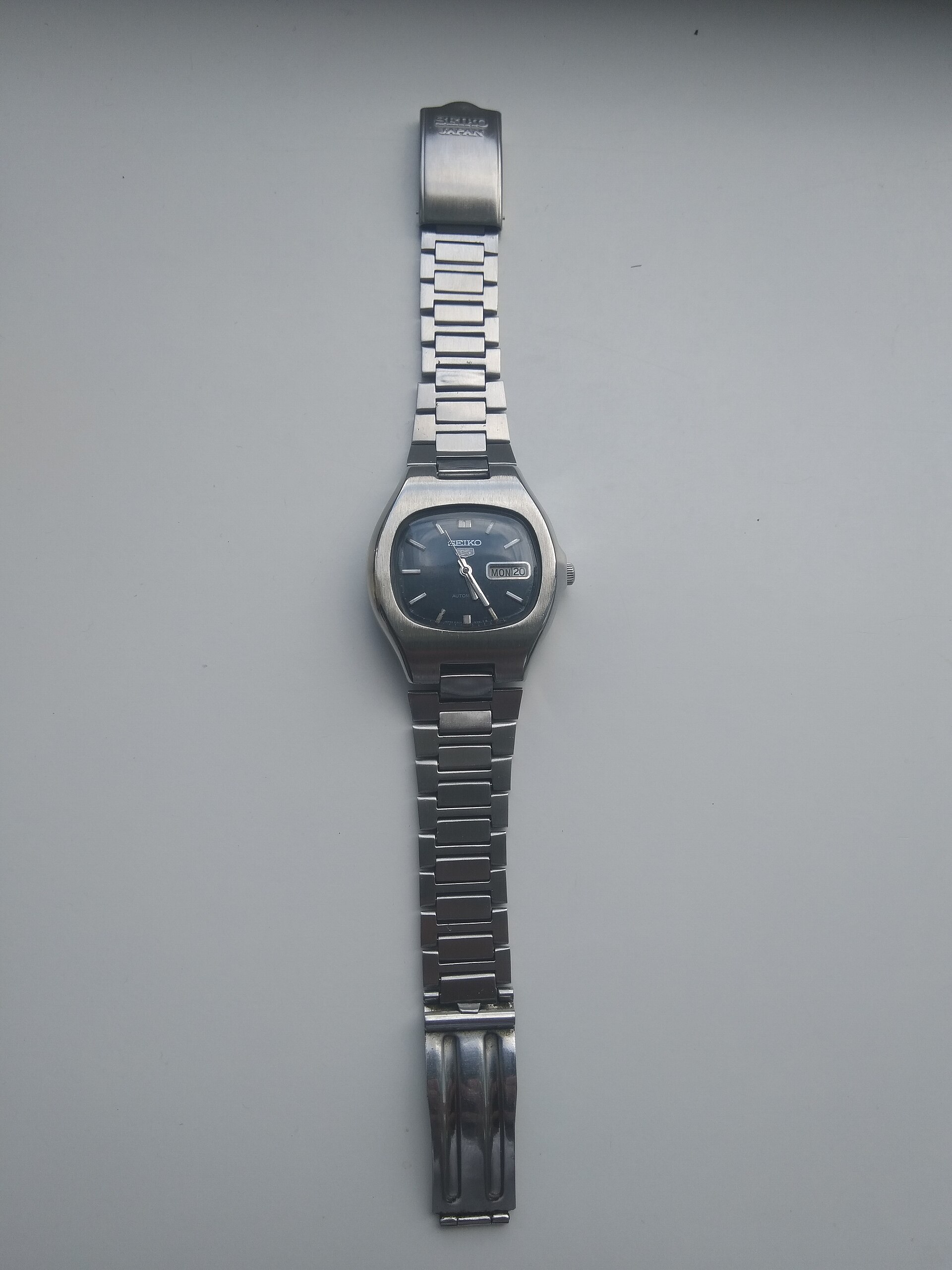
Endurism Dossier: Seiko 5 Sports (SRPD line)
1. NCO Ledger: the watch variant
A mechanical watch does not depreciate to zero. It does not run on a battery you cannot replace. It does not lose software support. The honest cost here is service, not obsolescence. So the ledger runs on a 10-year window, long enough for the smartwatch to have died twice.
Reference: Seiko 5 Sports SRPD, €299 new (Seiko.nl, July 2026). A full movement service at an independent NL watchmaker runs €80 to €150, needed roughly once a decade. Marktplaats and Chrono24 resale for a used SRPD sits at €150 to €240. The counterpart is a mid-range smartwatch, €350, replaced every 4 years, resale near zero after the second year.
| Seiko 5 Sports | Mid-range smartwatch | |
|---|---|---|
| Purchase | €299 | €350 |
| Replacements in 10 years | 0 | 2 (€700) |
| Service / battery over 10 years | €120 (one service) | €190 (two battery swaps) |
| Resale, year 10 | −€180 | €0 |
| 10-year Net Cost of Ownership | €239 | €1,240 |
The gap is €1,001 over ten years. That is not the whole story, so read the honest part.
At three years the smartwatch has not been replaced yet. Its ledger reads €350 plus one battery swap, roughly €445 with resale gone. The Seiko reads €299 with no service due. It still carries €180 of resale underneath. The Seiko already wins at year three. The gap only widens.
2. Long-form
Wind it once and it runs. No cable, no app, no account, no update that bricks it in 2031.
The Seiko 5 Sports is an automatic watch built around the 4R36 movement. It winds itself from the motion of your wrist. Day and date at three o'clock. A steel case, 100 metres water resistant, a display back so you can watch the rotor turn. The line has run, in one form or another, since 1963. The current SRPD costs €299.
Nothing inside it needs electricity. That is the whole argument. It grows sharper every year the grid does. A mechanical watch is a machine that keeps time on wrist movement alone. It has no battery to die, no firmware to abandon, no server to switch off.
Now the counterpart. A mid-range smartwatch costs €350. It lasts three to five years before the battery fades or the updates stop. Industry data is consistent: most smartwatches reach year four and then get replaced, not repaired. Two of them across a decade cost €700 in purchases. The resale is nothing. Nobody buys a four-year-old smartwatch.
The Seiko asks one thing back. Every seven years or so the movement wants a service, €80 to €150 at an independent Dutch watchmaker. That is the honest cost of a mechanical thing. Pay it and the watch runs another decade. Skip it and it still runs, just less accurately.
The math over ten years: €239 for the Seiko against €1,240 for the smartwatch stack. The Seiko holds €150 to €240 on the used market the whole time. The smartwatch holds nothing the day the next model launches.
Ownership is simple. Wear it. Wind it when it stops. Once a decade, hand it to a watchmaker for a clean and oil. The steel picks up hairline marks that read as history, not damage. The movement outlives the trend that sold you the smartwatch.
The smartwatch counts your steps for four years. The Seiko keeps time for forty.
3. Verdict card
A smartwatch dies twice in the time a Seiko 5 needs one service.