The film revival sells a plastic camera for around forty euros. It shoots happily for a roll or two a month. Within a year or two the advance gears wear and it settles into a drawer.
Then you buy another one. That is the quiet tax the revival never mentions. Five plastic bodies across a decade run to roughly two hundred euros. Every one of them is worth nothing the day it jams.
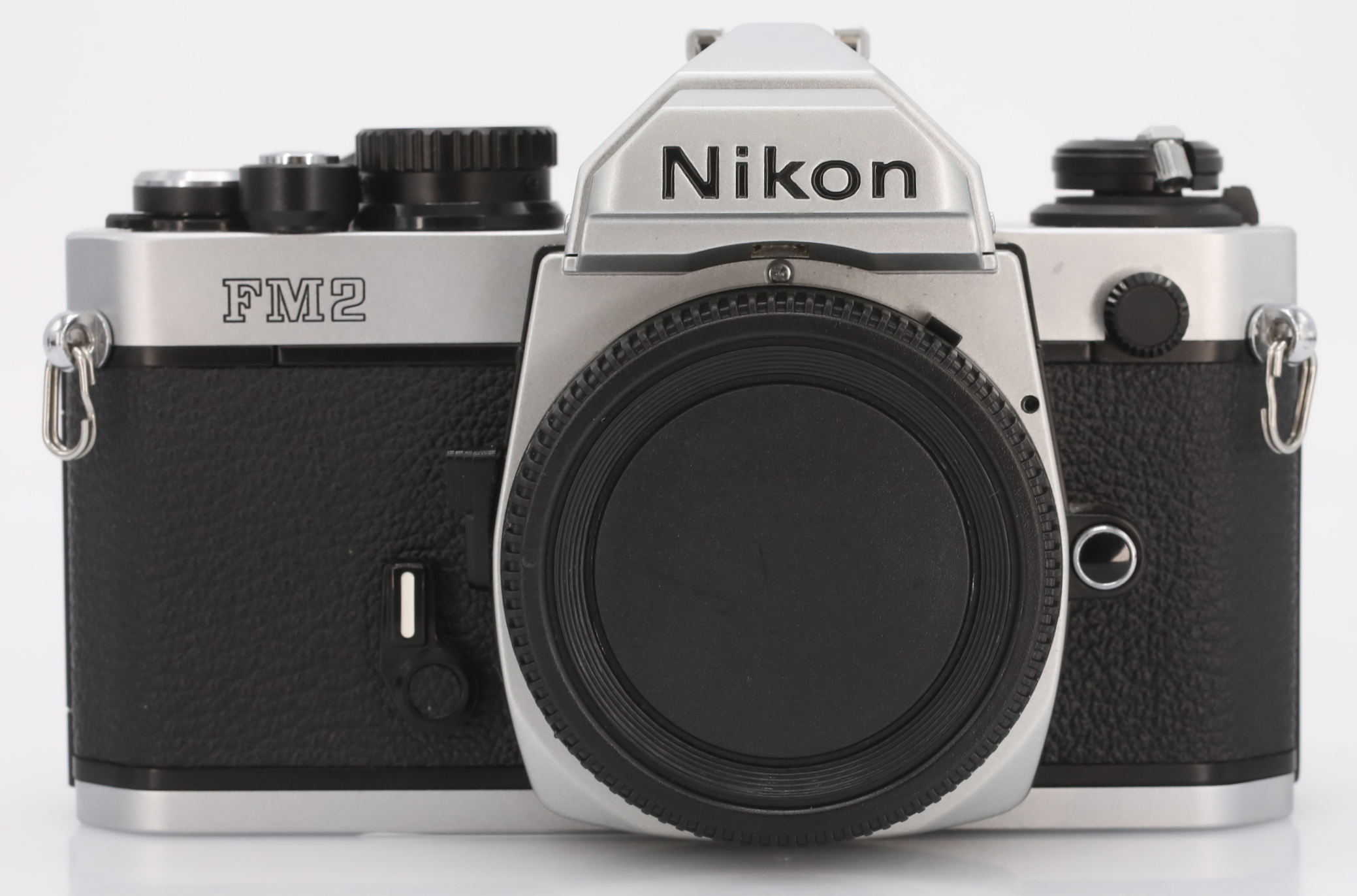
The Nikon FM2 is the camera that outlives all five. A good used body costs around €375 in the Netherlands. It is fully mechanical. It meters with a battery and shoots without one, at every speed up to 1/4000. Nikon built the shutter from titanium and later from an aluminium honeycomb. Those shutters are still firing forty years on.
Here is where the money turns. A well-kept FM2 holds its price. The body you buy for €375 today is worth about the same in a decade, often more. Nikon stopped making it and demand keeps climbing. Film is a wash, since both cameras eat the same 35mm rolls. So the honest comparison is what it costs to own the machine itself.
| Over 10 years | Nikon FM2 (used) | Kodak M35 (new) |
|---|---|---|
| Entry price | around €375 | €40,57 |
| Lifespan | decades, repairable | one to three years |
| Resale | around €375, often more | around €0 |
| Net cost to own | around €90 (one service) | around €200, five replacements |
Over ten years the plastic route costs you two hundred euros and leaves you holding nothing. The FM2 costs you a single service, about ninety euros, and leaves you an asset still worth €375. The expensive camera is the cheaper one to own. It is also the only one of the two you can hand to someone in 2050.
An FM2 ages into something better looking. The plating wears through to brass on the edges you touch most. Collectors call it brassing and they pay for it. Any competent camera technician can service the mechanism indefinitely. There is no firmware to abandon and no proprietary chip to fail. You own the object completely, the way you owned records before they became a monthly fee.
That is the contrarian move. The market trains you to rent images through a phone that loses all its value in three years. A €375 mechanical camera sits on your shelf holding its price and still taking photographs your grandchildren can develop.
The verdict. Buy one good FM2 and you own a working asset that holds its value for life.