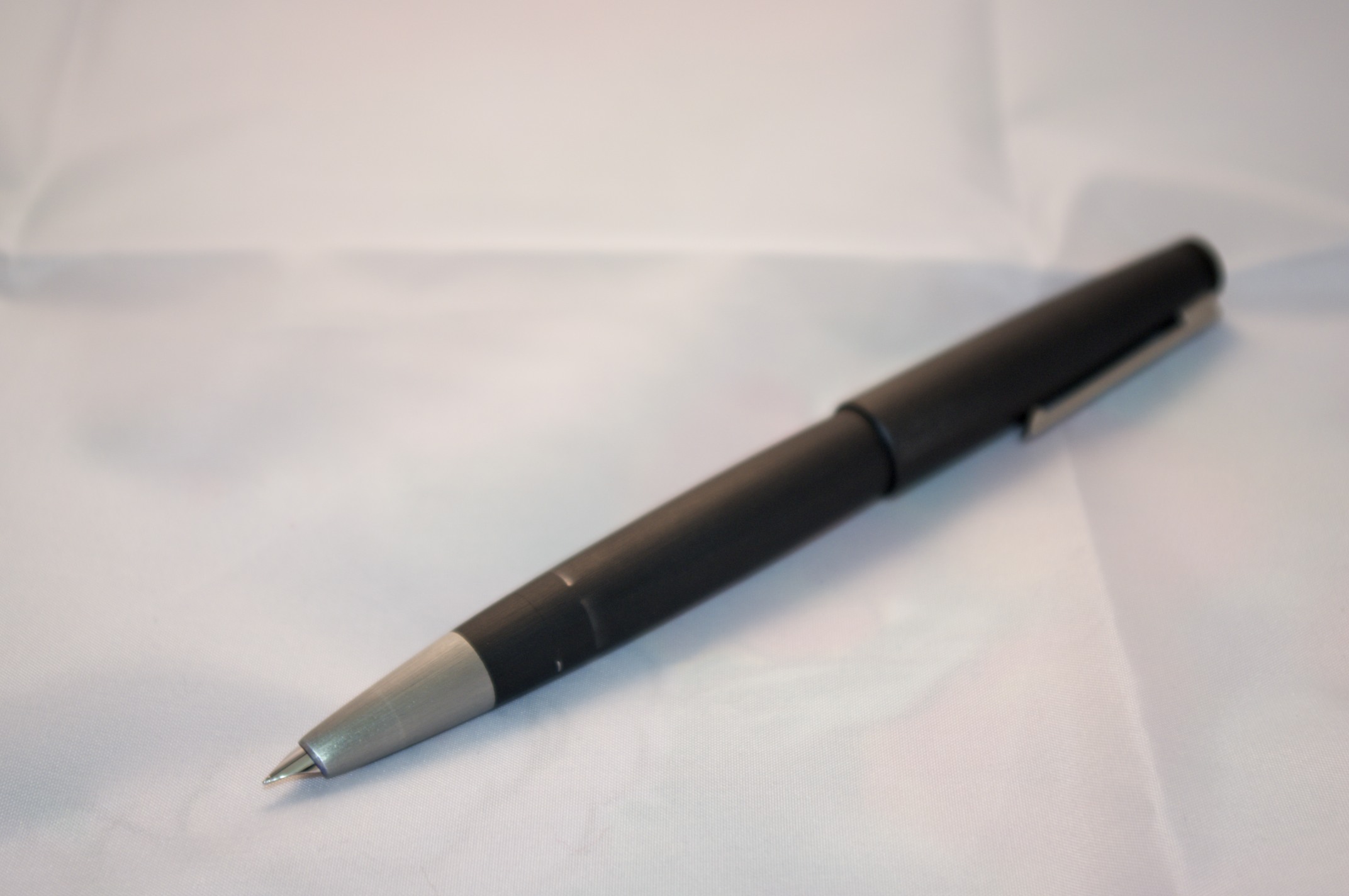
A ballpoint runs dry halfway through a sentence and you drop it in the bin without a second thought. You have done this hundreds of times. The pen was built to end that way, empty and disposable, another sliver of plastic on its way to landfill.
The Lamy 2000 was drawn in 1966 by Gerd A. Müller and it has not changed since. The body is Makrolon, a fibreglass-reinforced polycarbonate, brushed to a matte finish that hides fingerprints and small knocks. The nib is 14-carat gold, tuned by hand and hooded so only the tip shows. Nothing about it is fashionable, which is why nothing about it goes out of fashion. You fill it from a bottle of ink for a few cents or drop in a cartridge. When the nib finally wears after decades of writing, Lamy services it. The pen you buy at thirty is the pen you sign your pension papers with.
The price is 280,00 euro. That number stops most people. It rewards a closer look. A Bic Cristal costs 0,32 euro and writes until the tube empties, then it is gone. Buy the Lamy once and the running cost is a bottle of ink that lasts a year or two. The Bic keeps arriving, fifty to a box. Every one of them ends the same way.
| Lamy 2000 | Disposable ballpoint | |
|---|---|---|
| Price | 280,00 euro | 0,32 euro |
| Refill | bottled ink, cents a fill | none, binned when dry |
| Lifespan | decades of daily use | a few weeks |
| Ends as | a pen you hand down | landfill plastic |
There is a second return that never shows on a receipt. An early Makrolon Lamy 2000 still sells on the used market for close to its shop price, because the design has never been bettered and collectors know it. The tool you write with holds its value while you use it. That is the patina dividend in its quietest form, an object that costs almost nothing to own because it refuses to depreciate.
Verdict: 280,00 euro buys a pen you stop replacing, refilled for cents and worth its price the day you sell it.