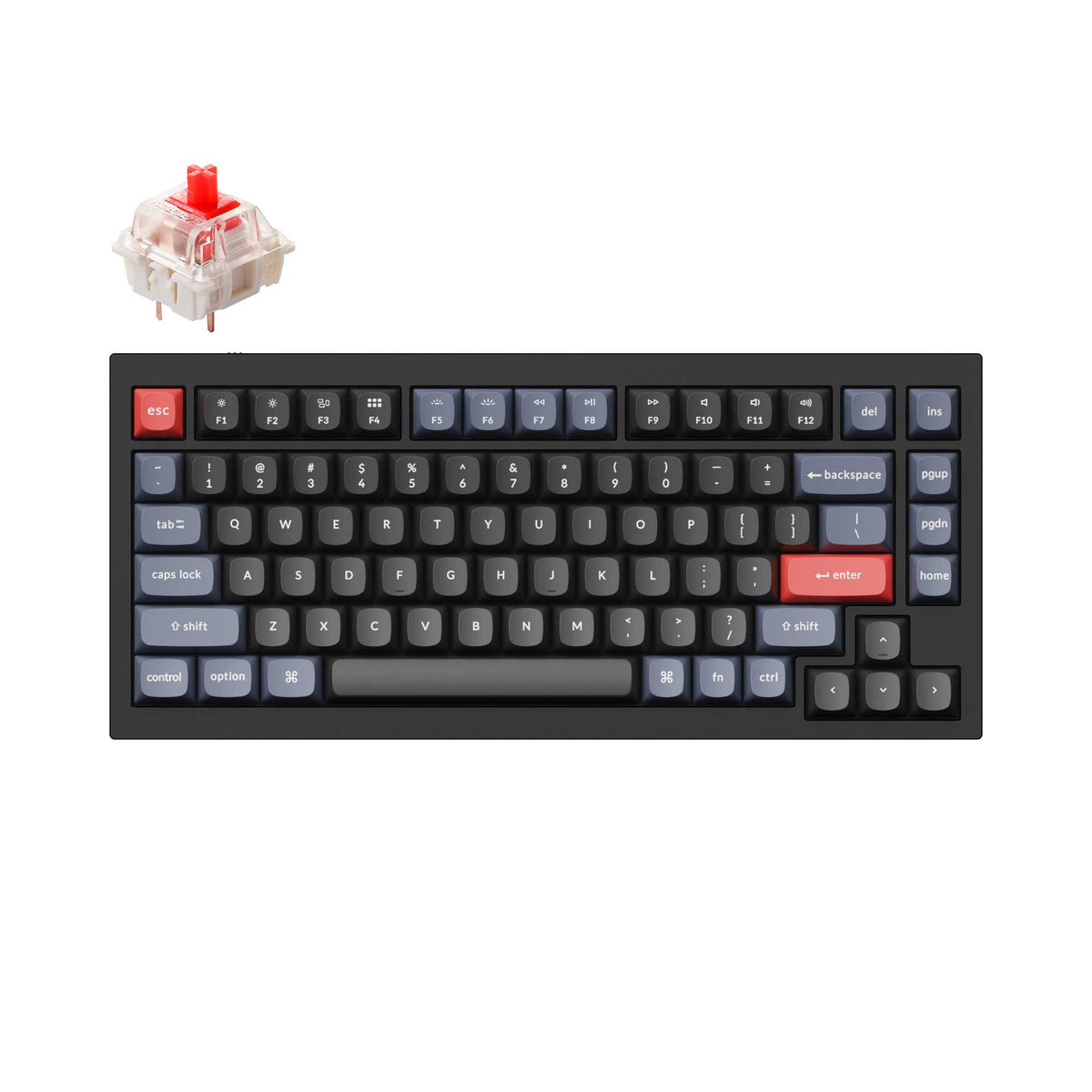
Endurism Spotlight: Keychron Q1
Most people who care about how a keyboard feels spend around €150 on a good one. A few years later they spend it again. The switches were soldered in, so a single dead key meant a new board. The keycaps went shiny and the legends wore off. The software that ran the lights stopped being updated. None of it could be fixed, so all of it went in the bin.
The object
The Keychron Q1 is a 75% mechanical keyboard machined from a solid block of 6063 aluminium. The case is gasket-mounted and held together with screws rather than glue. The switches sit in hot-swap sockets. A dead one lifts out by hand and a replacement drops in for under a euro, no soldering. The keycaps are doubleshot PBT, so the legends are moulded through the plastic and cannot wear off. The firmware is QMK and VIA, both open source. No vendor can abandon it and leave you with dead software.
The math
Both boards cost about the same on day one. The difference shows up over fifteen years of daily use. A premium gaming keyboard is sealed, so the first failure ends it. The Q1 absorbs the same failure for the price of one switch.
| Keychron Q1 | Premium gaming board | |
|---|---|---|
| New price | €142,99 | ~€150 |
| Dead switch | ~€0,50, swapped by hand | new board |
| Keycaps | replaceable, legends never wear | worn, part of the bin decision |
| Firmware | open source, yours to keep | vendor-controlled |
| 15-year spend | ~€170 | ~€450 |
| Resale value | real second-hand demand | close to nothing |
The gaming buyer pays the replacement tax roughly three times over fifteen years. The Q1 owner pays once, then spends a few euro on the odd switch or keycap set. That leaves around €280 in your pocket across the same period. You also own something that never reaches a landfill.
Ownership
An aluminium case earns a used sheen the way a good tool does. The board comes apart on the desk with a hex key, so cleaning it is a job you do yourself. Because every part follows the MX standard, the Q1 is never finished. A ten-year-old board takes new switches, fresh keycaps and a remapped firmware, then types like the day it arrived. A sealed board only ever moves in one direction, toward the bin.
Verdict
One repairable keyboard you keep for fifteen years costs a third of the sealed boards you would otherwise replace. Own better.