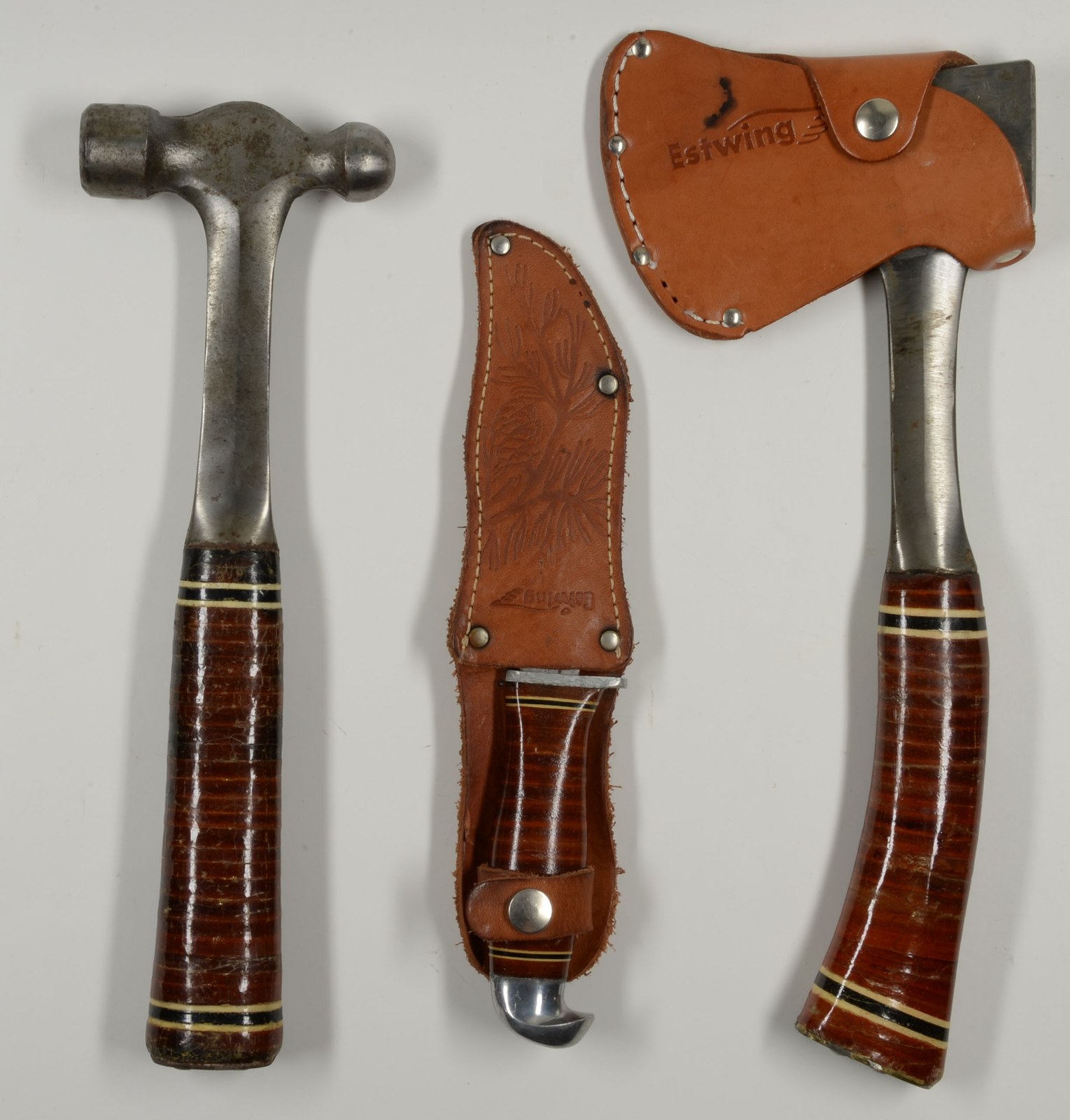
Endurism Spotlight: Estwing Leather-Grip Hammer
A €10 hammer and the €74 Estwing drive the same nail. The difference shows up years later, when one has been replaced and the other still sells for its original price.
The object
The Estwing E16C is one piece of forged American steel from the striking face to the base of the grip. Head and handle are a single forging. There is no joint where they meet, so there is no joint that can loosen. A cheap hammer fails in two places. The head works free of the handle, or the handle splits at the neck. Estwing removed both failure points by refusing to join two parts in the first place. They have made them this way in Rockford, Illinois since 1923. The grip is a stack of leather washers you sand smooth and re-oil for decades. When the leather finally wears through, a saddler restacks it and the tool is new again.
The math
The cheap hammer looks like the frugal choice. It rarely is. A fibreglass claw hammer costs €10.44. Swing it for a living and the handle loosens at the neck within a few years. You buy another, then another. Across a working life the total reaches seventy to a hundred euros. Every one of those hammers ends in a skip.
The Estwing costs €73.99 once. A used Estwing claw from the 1980s sells on Marktplaats today for around €75, roughly its original price. That is the patina dividend. The good tool holds its value while the cheap one depreciates to zero.
| Estwing E16C | Fibreglass claw hammer | |
|---|---|---|
| Price (NL, incl. VAT) | €73.99 | €10.44 |
| Head-to-handle joint | None, one forging | Glued and wedged, the failure point |
| Working lifespan | Decades, effectively for life | A few years of hard use |
| Resale, used | ~€60–75, near original price | ~€0 |
| Spent over a working life | €74 once | €70–100, bought again and again |
Ownership
The leather grip darkens where your palm sits. It records every job it did and reads as proof to the next owner. A hammer worked for thirty years sells for the price of a new one, because the proving is done. Quality tools amortise. Disposable ones depreciate. The landfill it spares is a side effect, never the reason.
The verdict
The cheap hammer is the expensive one. Buy it once and hand it down.