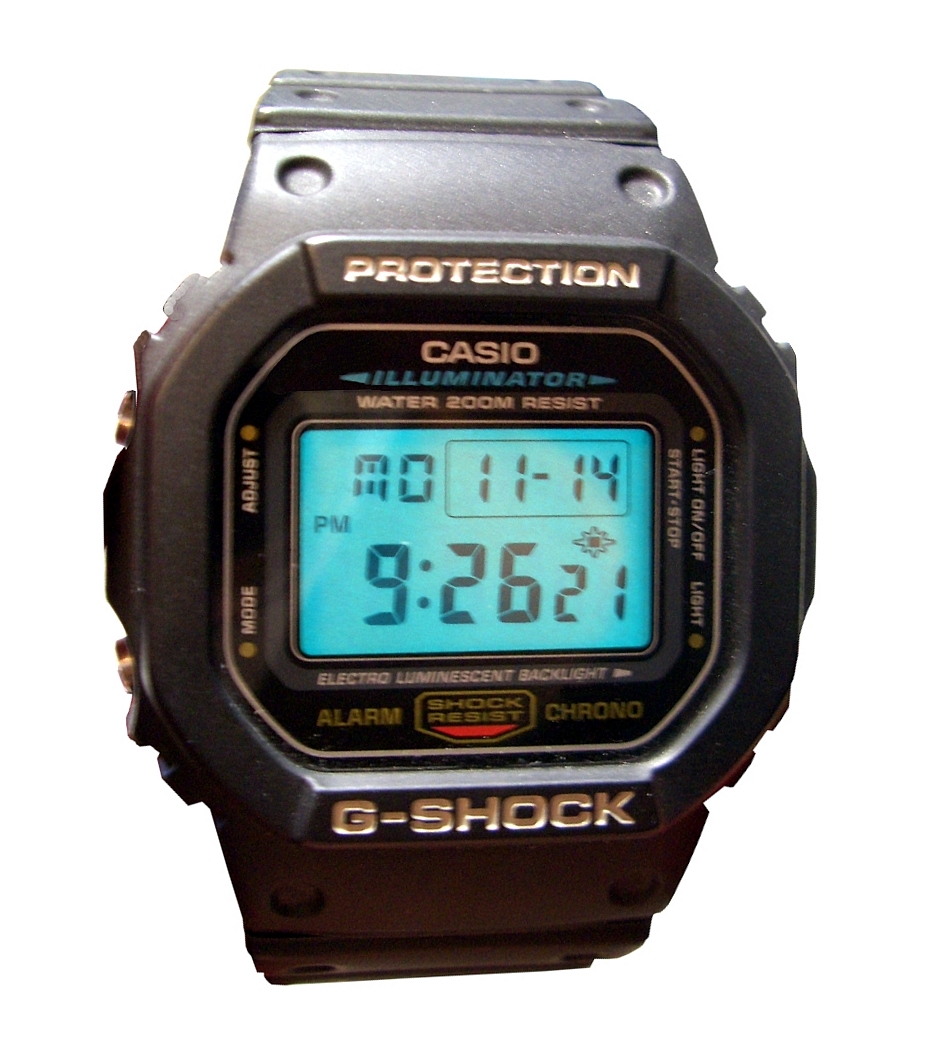
Casio has been building the same square watch since 1983. A G-Shock from that decade still keeps time the moment you drop in a fresh coin cell.
The DW-5600E is resin, mineral glass and a quartz module. It shrugs off a ten metre drop and two hundred metres of water. Nothing on it can crack into a paperweight. Nothing on it runs software that Casio can one day stop supporting. A single coin cell keeps it running for years. When that cell dies you spend a couple of euro and a minute with a screwdriver. Casio has made this reference for so long that straps, bezels and cells cost almost nothing. Any watch shop can fit them. A scuffed square from the eighties still finds a buyer on Marktplaats.
The money is the whole argument. The comparison that matters is the thing most people strap on instead: a smartwatch built to expire. An Apple Watch SE starts at 269 euro. It takes software updates for a handful of years. After that the apps drift off and the battery fades. A service then costs more than the watch is worth, so you buy the next one. Across twenty years of daily wear that is about four of them, near 1.076 euro. Every dead one is worth nothing. The G-Shock costs about ninety euro once. Add a few euro of coin cells over the same two decades. That wrist lands under two cents a day. The Apple Watch lands near fifteen.
| Casio G-Shock DW-5600E | Apple Watch SE | |
|---|---|---|
| New price | about 90 euro | 269 euro |
| Working life | 20 to 30 years | a few years, until updates stop |
| Upkeep | coin cell, a couple of euro | battery service 100 euro-plus, or replace |
| Value after ten years | still running, still sells | e-waste |
| Cost over twenty years | about 120 euro | about 1.076 euro across four watches |
Verdict: ninety euro once, worn for thirty years, against a wrist you re-buy every time a server rules your watch too old.