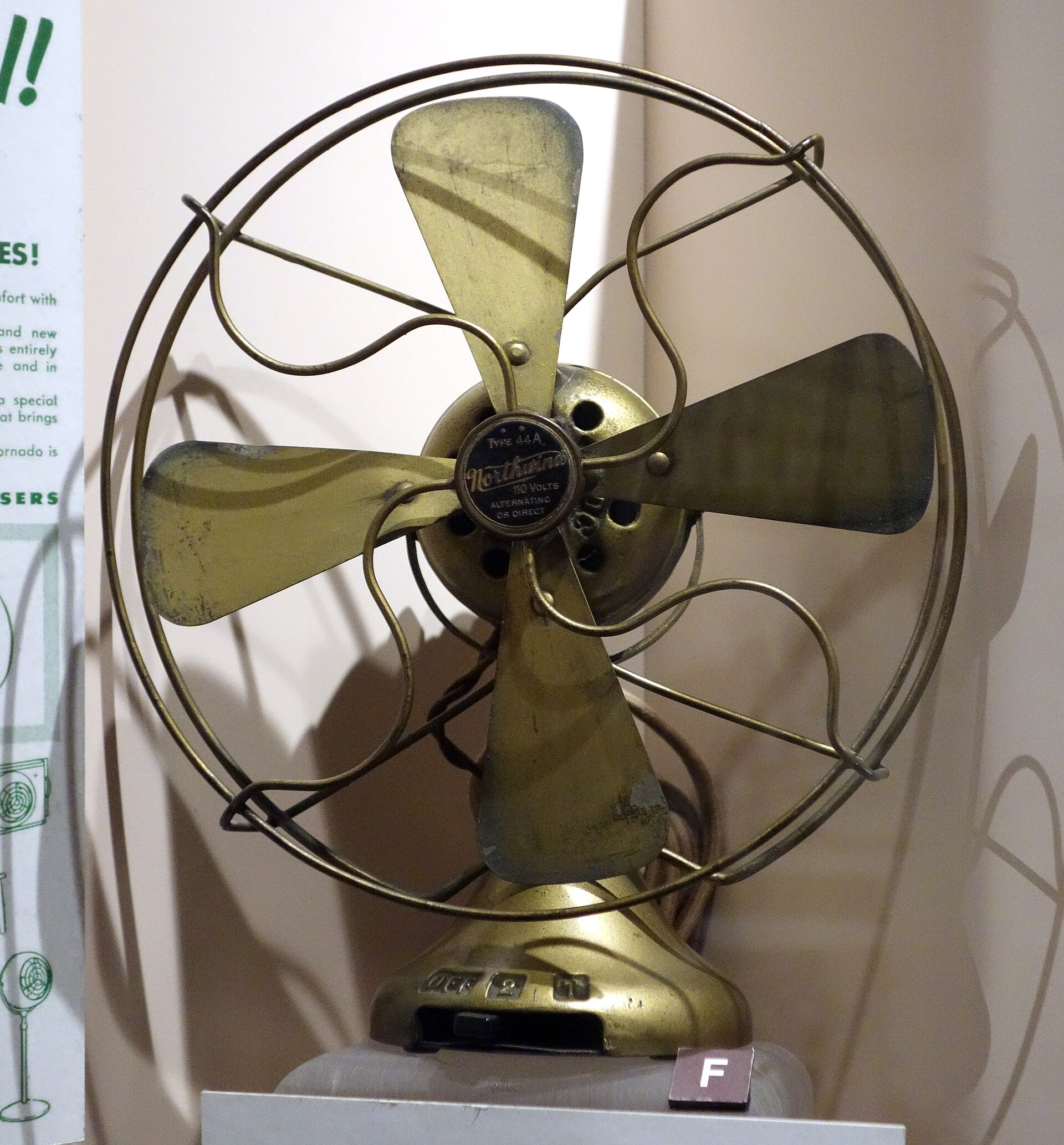
Endurism Dossier: The Hundred-Year Fan
Cast-iron desk fan, brass blades. Emerson, GE, Westinghouse, AEG, Siemens-Schuckert, Marelli. 1900 to 1940.
NCO ledger, three years
Example: a working brass-blade fan bought at €90.
| Acquisition | Maintenance, 3yr | Resale, yr 3 | Net cost, 3yr | |
|---|---|---|---|---|
| Antique brass fan | €90 | €15 (oil, new cord) | −€95 | €10 |
| Plastic fan, ×2 | €40 | €0 | €0 | €40 |
Patina dividend: €30 over three years. The fan holds its price, so owning it costs almost nothing. The plastic money is gone. At year fifty the antique still turns.
(Resale figure from Marktplaats and eBay comps. Condition-dependent.)
The Editor
A Siemens-Schuckert fan built in 1932 still moves air across a desk in 2026. Cast iron base. Brass blades. A single oil port on the back of the motor.
The thing was made to be serviced. You drip oil into the port once a season. You replace the cloth cord when it frays. Beyond that there is almost nothing to fail, because there is almost nothing inside. A motor, a shaft, a cage, blades. Emerson stamped "Built to Last" on the tag and meant it literally.
The money is the strange part. You pay €90 for a working example on Marktplaats. Three years later it is worth €90, or more, because the supply only shrinks. You owned a fan for three summers and it cost you the price of a bottle of machine oil. The €20 plastic fan from the supermarket is in a landfill by then. So is its replacement.
This is the patina dividend in its purest form. The fan does not depreciate. It appreciates. Brass darkens. Paint wears down to the metal. Collectors pay for exactly that. The wear is the value.
There is a scene around these fans. People rewire them, polish the cages, trade them at shows. You buy into a hundred-year-old object that will outlast the room you put it in.
Verdict card
A fan from 1932 that returns its purchase price is the cheapest air in the house.