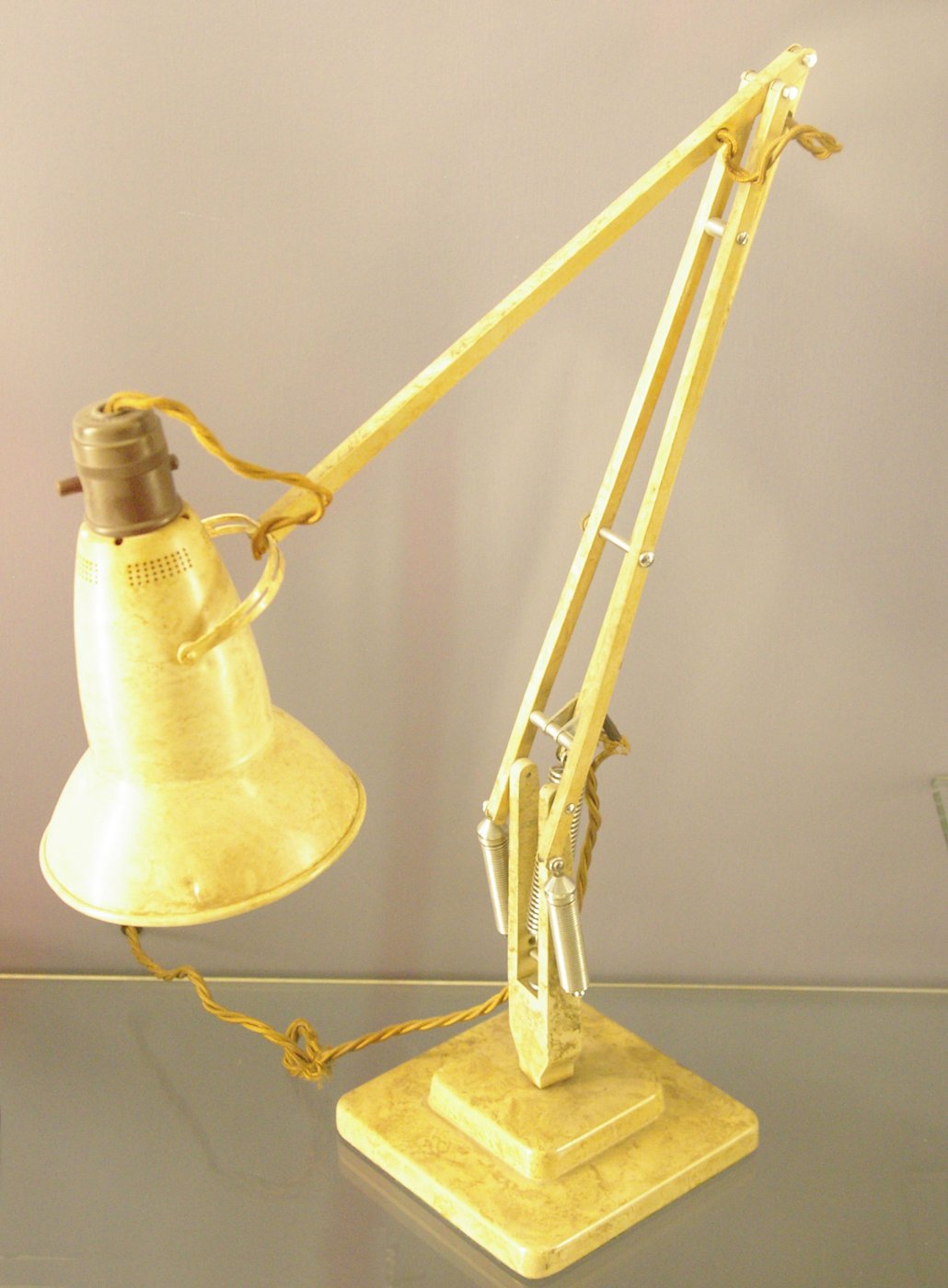
A desk lamp is supposed to point where you put it and stay there. Most of them sag by the second year, the arm creeping down while you work until you prop the head up with a book.
The Anglepoise fixes that with springs. George Carwardine, a car suspension engineer, worked out in the early 1930s how to hold a weight at any angle. His answer was constant-tension springs, the way a human arm holds a load without shaking. The three-spring Original 1227 arrived in 1935 and has been built the same way ever since. Steel arms, a weighted base, three springs doing the work of muscle. Push the shade to the far corner of the desk and it stays. The springs, the shade, the bulb holder and the cord are all replaceable parts. A tired Anglepoise gets a new spring instead of a place in the bin. It sits in the design collections of MoMA and the Design Museum, and it still lights homework tonight.
A flat-pack desk lamp costs 9,99 euro at IKEA. The joints are plastic, the arm loses its grip inside a year or two, and once the tension is gone there is nothing left to tighten. You buy another. Over a decade that runs to five or six lamps in the bin. The Original 1227 costs about 249 euro new. One base, serviced now and then with cheap springs, outlasts that decade and the next. Vintage Anglepoise lamps from the fifties and sixties change hands on Marktplaats for real money. They often sell above their original price, because a sprung steel arm never dates.
| Anglepoise Original 1227 | Flat-pack desk lamp | |
|---|---|---|
| New price | about 249 euro | 9,99 euro |
| Arm holds position | for decades | a year or two |
| Repairable | springs, shade, cord | no |
| Over 10 years | one lamp | five or six, all binned |
Verdict: pay once for the arm that still holds its angle when the cheap ones have sagged into the bin.